Schermata 2023-01-11 alle 16.46.17

Why choose Sicily to plan your corporate events?

How could anyone not love Sicily?
Sicily is the largest region in Italy and the largest island in the Mediterranean Sea.
It is a safe and exclusive destination just few hours by plane from anywhere in Europe.
It is famous worldwide for the beauty  and the richness of its archaeological, artistic and cultural heritage (6000 years of history and a list of 20 Unesco’s World Heritage Sites) and it is also a land of breathtaking sceneries (4 Regional Parks, 77 Nature Reserves and 3 volcanoes), refined cuisine and great wines.

Because of its strategic position, mild climate, amazing natural beauties, millenary treasures and many conventional and alternative conference venues, Sicily is a top destination for corporate events in Italy and one of the best destinations for incentive travel programs in the world.

After all, Sicily is always an exclusive destination where leisure and business activities can be combined for the best possible experience.

Sicily attracts millions of tourists every year.

Sicily boasts many amazing sceneries for outdoor and indoor team building activities for companies that aim to improve their team performances.

Tailor made corporate event in Sicily

We offer to travel on a journey made just for you and your team. Travel on the footsteps of ancestors and build the best personal and meaningful memories.

There are key elements for a successful incentive in Sicily:

1) Exclusive and unusual locations
Finding the perfect accommodation in one of the best Sicily destinations is just the first step.
2) Unforgettable gala dinners and parties
Great unconventional meeting venues, sometimes more interesting than the usual corporate hotels
3) Great ways to spend your leisure time
Let your trips be driven by deep emotions inspiring rare and wonderful experiences and confirm awareness of our great cultural legacy.
4) Exciting activities to improve group relationship and performance
Team building activities have a fundamental role for companies that aim to improve their own team performances.

“Every great journey starts from a wish… “

Contact us and tell about it and we will help you make your dreams come true.


Credits photo pantarheiwedding.it
WhatsApp Image 2022-10-07 at 17.47.33 (1)

A cheese to save 

Nowadays the coupling of gastronomy and tourism is triumphing more and more. With people in search of natural food and rediscovering the products typical of a single area, whether confectionery or wines, gastronomic specialities, cheese, spices and aromas, there is a growing demand from who, rejecting pre-packed organized tours and the places characterized by mass tourism, require alternative itineraries that together with visits of archeological sites and monuments give opportunities to know and also discover unfamiliar aspects of Sicily. It is in this framework that we must set the Consortium for the Tutelage of Belice Valley Vastedda.to safeguard a cheese with an illustrious tradition.

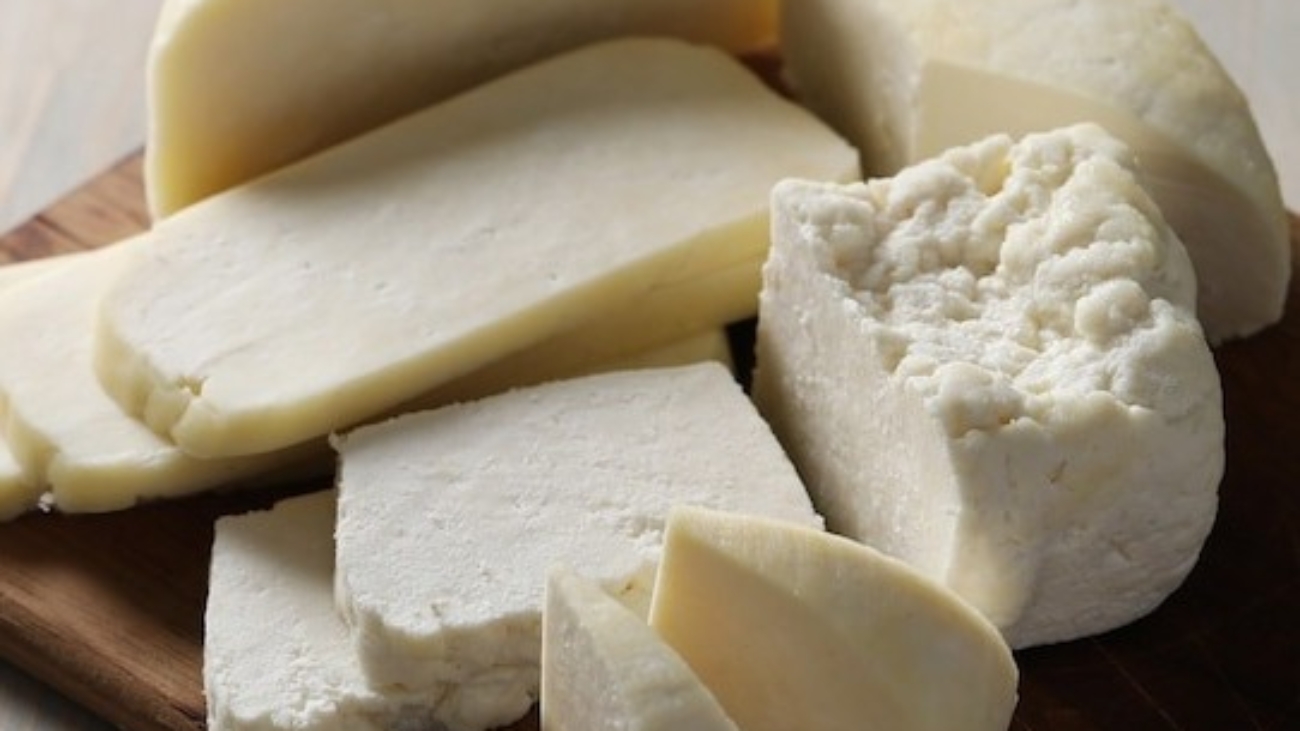
In Sicily, the word “vastedda” or “guastedda” refers to a particolar type of squashed bread. Instead, in the Belice Valley, it is a soft and a tasty sheep’s cheese which is the same shape of a “vastedda”. It is unseasoned white cheese with a slightly acidulous taste made with milk from Belice Valley sheep, an ovine breed of outstanding quality, with a pedigree,  that has remote origins and is known nationally for its productive characteristics.

It derives from the cross-breeding of three different species, the Comiso one for the size, the Sardinian one and the “pinzirita” one for the rusticity, its capacity to adapt to difficult environmental situations.

It is important to buy “vastedda” when visiting this part of Sicily to safegard a genuine product with a consolidated relationionship with territory and threatened with extinction.

tour_sicilytudine_egadi_cala_rossa_favignana

Was Ulysses’ trip actually a sail around Sicily?

Was the famous Greek poem written by a woman of Sicilian origin?
Was Ulysses’ trip actually a sail around Sicily?

On the footsteps of the British writer S. Butler, who visited Sicily in 1894, we try to guess who she was, where and when she wrote.

There were many poetesses in the earliest ages of Greek literature and there is no ground for refusing the possibility that one of them lived in Sicily around 1000 B.C.
The fact that the recognized heads of literature in the Homeric age where the nine Muses-for and both Iliad and Odyssey begin with an invocation addressed to a woman suggests female authorship the Odyssey there is a preponderance of female interest, a fuller knowledge of things generally a woman deals with. People always write by preference of what they know best, and they know best what they most are, and have most to do with.
Women in the Iliad are few and rarely occupy the stage. The writer of the Odyssey is fierce like a tigress at times, but it is sweetness rather than strength that fascinates us throughout the poem. “It is the charm of a woman not of a man” as P.B. Shelley says (in Selected letters – 1882).

In the Odyssey women are directing, counselling and protecting men in domestic life. There is Minerva, omnipresent at the elbows of Ulysses and Telemachus to keep them straight and she alternately scold and flatter them. In the Iliad she is the warrior, in the Odyssey she is a great woman but not a warrior. Helen is master in the house of Menelaus, Calypsos is the mastermind, not Ulysses and look at Nausicaa, delightful as she is, it would not be wise to contradict her, she knows what is good for Ulysses and all will go well with him so long as she obeys her, but she must be master and he a man.
No woman in the Odyssey is ever laughed at, men are. Woman, religion and money are the three dominant ideas in the mind of the writer of the Odyssey. In the Iliad the belli causa is a woman, in the Odyssey the belli causa is mainly money and women are most in evidence.

Penelope was most probably made more virtuous than she was to preserve female honour as scandalous versions of Penelope’s conduct were current among the ancients. The authoress was most probably a young, unmarried lady. A man would not have made the suitors a band of lovers at all, bringing them at her feet, spoil them and in the end destroy them to exalt her sex. Shall we go further wrong if we conclude that Penelope picked out her web, not so much in order to delay a hateful marriage, as to prolong a very nice courtship instead? After all she has the right to please herself or not?
The authoress chooses to pretend that Ulysses was dying to get back to her, she knew perfectly well that he was in no great hurry to do so, she was not, however, going to admit anything so derogatory to the sanctity of married life, or at any rate to the power which a wife has over her husband.
The poem is such a tour de force as none but a high-spirited, headstrong girl, who had been accustomed to have things done her own way and she had the Iliad in front of her while writing.

Scheria and Ithaca are drawn from Trapani and its surroundings including the Egadi Islands. The voyages of Ulysses practically resolve themselves into a voyage from Troy to the neighbourhood of Sicily and so into a sail round Sicily, beginning with Trapani and ending with the same place at the foot of Mount Eryx that Ulysses reaches in a dark night full of mist, where a cave with a supposed hidden treasure is known till today by locals.

There is the description of the wing in the harbour of Phorcys to the cave in which he hides his presents, up to mt. Neritum along its long top to the spring and the Haven Rock and finally the path passing the hill of Mercury down to Ithaca, as accurately presented to us by the road from the saline of S. Cusumano to the Grotta del Toro on M. Eryx, the fountain, the Raven Rock, and the road to Trapani, as though the Odyssey had been written yesterday.
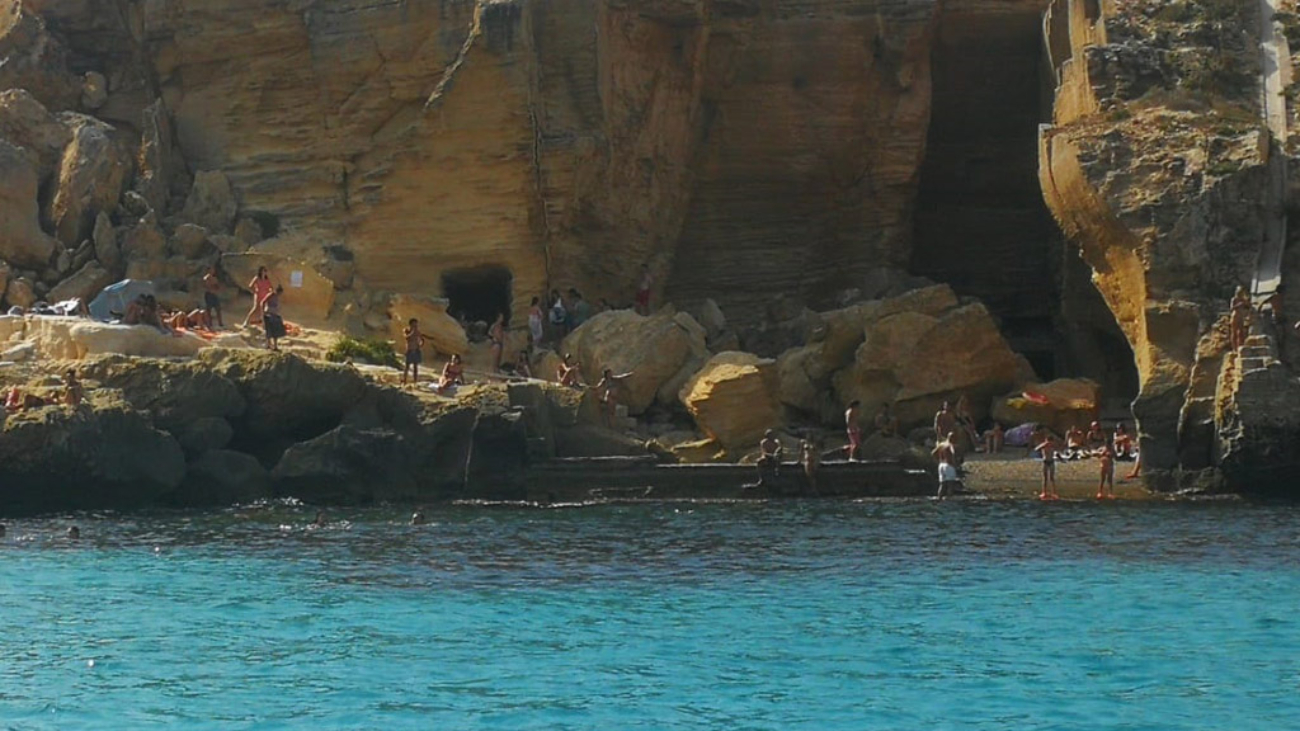
The Egadi Islands and particularly Asinelli and Formiche could be the Cyclops, as Sican descendants of the people who built the megalithic walls of Eryx.
Favignana is the island where Ulysses hunted the goats and the cave of Poliphemus is on M.Eryx then.
So, who was the writer?

She had for sure the Iliad in front of her and knowledge of the lost Greek epic poems while writing. We have then to find a woman of Trapani, young, fearless, self-willed and jealous for the honour of her sex. She seems to have moved in the best society of her age and country, for we can imagine none more polished on the west coast of Sicily in the Odyssean times than the one with which the writer shows herself familiar.

She must have had leisure, or she could not have carried through so great a work. She puts up with men when they are necessary and illustrious, but she is never enthusiastic about them, and likes them best when she is laughing at them; but she is cordially interested in fair and famous women. We should look for her in the house of king Alcinous where she must have been an intimate member to be able to laugh at his head as much as she chose.
She knows the house and the gardens as much as she likes to describe them as her own. No one else is described wit livingness and enthusiasm like Nausicaa, a product of an early Ionian colony from Corfù (Drepane – sickle).
The poem must be earlier, set the fall of Troy at 1184 B.C by Thucydides, than 734 B.C., so before the foundation of Syracuse by Korinthos.


blog_sicilytudine_viaggiare_in_sicilia_di_inverno_1

Traveling to Sicily in winter

Traveling in Sicily offers unique emotions, the island is famous for being a destination for surprises and sensational discoveries, at any time of the year. Autumn in particular, represents a season that invites you to travel to the heart of this magnificent land, if only for the temperatures that are considerably lower.

Known as the harvest period, autumn in Sicily will allow us surprising tours and food and wine discoveries, thanks also to the wine routes that offer visitors the opportunity to visit ancient cellars, typical regional dishes and experience the atmosphere of the past.

Starting from the center of the island, an extremely interesting route is that of the Wine and Flavors route of the Nisseni Castles. We are in the heart of Sicily, where time seems to have stopped, far from the mass tourist spots.

The “Nisseno” – this is the name of the area – offers a fascinating panorama, full of castles such as those of Butera, Falconara, Caltanissetta and Mazzarino; for the monuments of the past we mention the archaeological areas of Gibil-Gabib or the abandoned sulfur mines of Caltanissetta.

In this splendid area the Riesi DOC wine is born, a Nero d’Avola that is deliciously accompanied with other local products, such as almonds and honey, or traditional dishes, such as the “muffolette” of golden bread or the “mbruliata” of stuffed bread. All strictly seasoned with Dop oil produced on site.

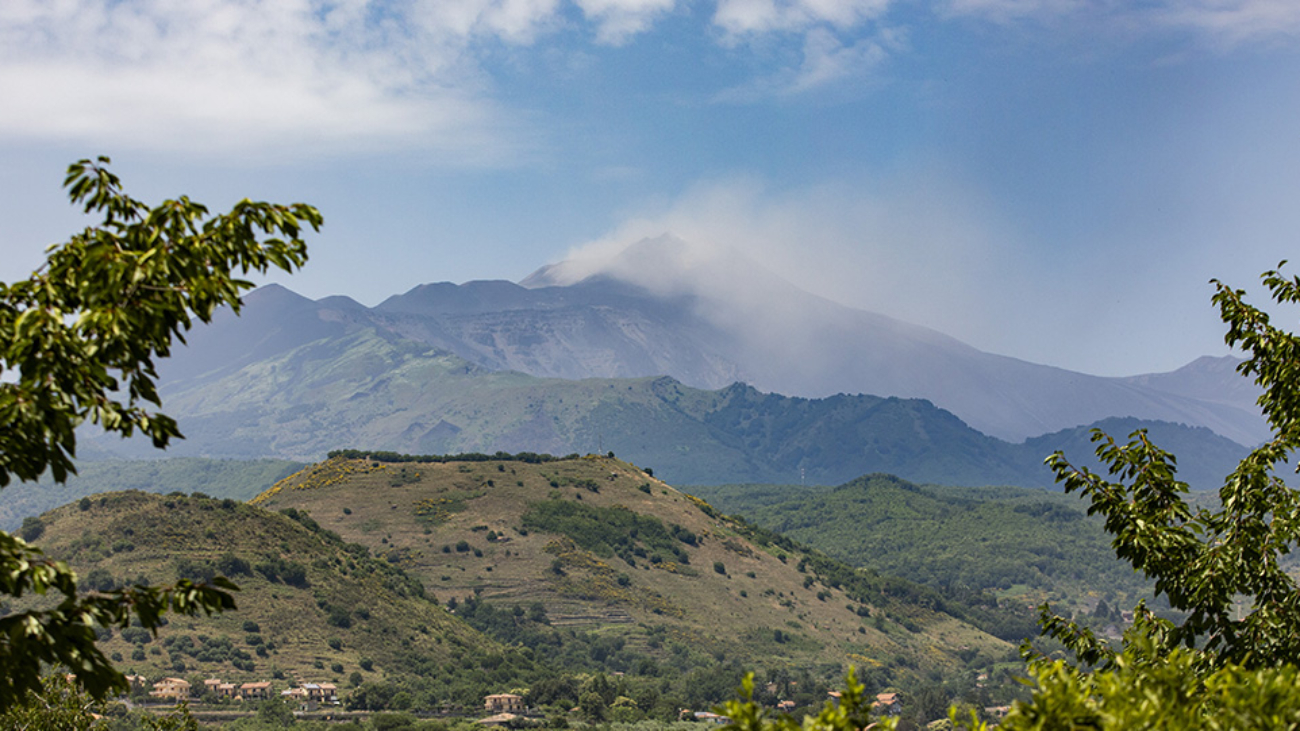
An ideal destination for lovers of unusual places is the “Fortress of Wine”, also known as the Solicchiata Castle. The Castle is located in Adrano, a small town located in the heart of the Etna Park and, due to its particular activity, is an example of a unique company of its kind: it is the only castle in Italy used as an oenological establishment.

The fortress, in the past, was the only Italian winery to receive the authorization from the Royal House of Italy to raise the flag with the Royal emblem on the plant, thanks to the excellent quality of a particular supply of wines donated to the rulers of the weather. In this enchanted place the first “Etna Rosso” was born, to be tasted with delicious local products. A jewel of Sicily that is the most awarded Italian winery in the world.

Going down towards Catania, don’t miss the Sagra della Mostarda e del Ficodindia. This event, organized for several years, leaves visitors with the delicious scent and unparalleled taste of hot mustard, served in the typical terracotta bowls.

In the cool autumn, Sicily is a riot of festivals, parties and occasions for tasting the food and wine of the region. It is possible to take a ride on board the Etna wine train or on the carriages of the train of taste, which from Messina reaches Caltagirone; also known are the train of cheese – which leads from Syracuse to Ragusa – and that of ancient grains, which from Palermo reaches San Cataldo. The latter is a real vintage train, with carriages called “centoporte” and original electric locomotive.

An important Sicilian event – which every year receives particular success and great participation – is the Ottobrata Zafferanese, which takes place in Zafferana Etnea. Here the flavors of the Sicilian food and wine tradition blend harmoniously with music, art and crafts. Every weekend in October between Piazza Umberto, the Villa Comunale and in other corners of the town, producers and stalls of grapes, wine, honey, mustard, prickly pears, pomegranates, walnuts, hazelnuts, chestnuts, pistachios, nougats and fine oil give life to an incomparable show dedicated to the exaltation of taste.